
Counseling Degrees & Licenses in Idaho
Counseling Schools Search
When you click on a sponsoring school or program advertised on our site, or fill out a form to request information from a sponsoring school, we may earn a commission. View our advertising disclosure for more details.
“Relationship problems, depression, and anxiety are some of the common struggles that counselors can help with.”
Rick Boyes, PhD, Director of the Clinical Mental Health Graduate Counseling Program, Northwest Nazarene University
Pursuing a counseling career in Idaho is likely to prove worthwhile given the current demand for a larger workforce within the state. Issues of both workforce supply and population demand contribute to the pressing need for a highly skilled mental health professional workforce.
In terms of population demand, Idaho has several concerning indicators of mental health that exceed the national average. According to Mental Health America (2024), Idaho recently ranked 23 out of the 50 states and Washington, DC in terms of its access to mental health services in 2023.
The severity of the mental health workforce shortage in Idaho cannot be overstated. In 2022, the Idaho Department of Health and Welfare recently declared that 100 percent of Idaho is designated as a “Health Professional Shortage area.” According to 2025 data from the U.S. Department of Health & Human Services, only one Idaho county (Ada County) is not considered a shortage area at all, while three counties have partial shortages and all other counties in the state are shortage areas as a whole.
A number of factors contribute to Idaho’s current mental health workforce challenges, including low wages, lack of culturally responsive services, quality training supervision, and targeted recruitment efforts. Other significant factors include inadequate health policy response, limited stakeholder collaboration, and poor state-level data management practices.
Given the circumstances and the impact of the Covid-19 pandemic, prospective counselors in Idaho will likely find significant opportunities. Read on to discover how to join various counseling careers in Idaho, including detailed information about academic programs and licensing.
Q&A with Expert: Rick Boyles, PhD
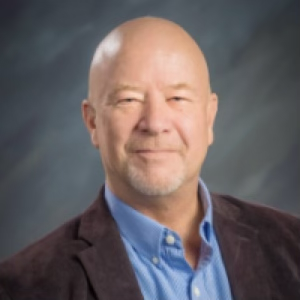
Dr. Rick Boyes is the director of the clinical mental health track in the graduate counseling program at Northwest Nazarene University. He is also the coordinator of the trauma, grief, and crisis area of emphasis and the clinical supervisor of the university’s counseling clinic. He holds a PhD in counselor education and supervision and is a licensed clinical professional counselor with over 40 years of experience in private practice.
Dr. Boyes specializes in working with adult survivors of childhood trauma and sexual abuse and has lectured throughout the country on these topics. He is certified in clinical hypnotherapy and EMDR. He has extensive training in IFS (Internal Family Systems) and is a co-founder and sponsor of the Idaho IFS Association (IDIFSA).
CounselingSchools.com: What do you wish the public understood about mental health counselors in Idaho?
Dr. Boyes: A licensed professional counselor, or LPC, holds a master’s degree in counseling from an accredited university graduate program. Those specializing in marriage and family therapy may have chosen to pursue licensure, leading to the professional title of licensed marriage and family therapist or LMFT. Both programs typically require 60 credit-hours of graduate work over approximately three years of study and the accumulation of one thousand hours of clinical experience supervised by licensed clinical professional counselors or licensed marriage and family therapists who are also registered and approved by the State of Idaho Board of Occupational Licenses to provide such supervision.
It is common knowledge that the percentage of Idaho’s population that receives mental health care through state appropriation of funding places our state 49th in the nation. The availability of services in rural and remote areas of our state remains seriously lacking, as is the case with many areas of healthcare. The growing use of telehealth for counseling services is making headway, particularly following its rise in popularity during the Covid pandemic. In addition, a growing awareness and receptivity to the value of professional counseling is fueling a shift in consciousness that has greatly helped to eliminate a long-standing stigma regarding seeking help in this area of our lives.
While counselors do not prescribe medication, they are qualified to diagnose and treat a wide variety of mental health issues. Relationship problems, depression, and anxiety are some of the common struggles that counselors can help with. Innovative approaches are revolutionizing the treatment of symptoms resulting from childhood trauma and sexual abuse and changing the way these deeper wounds can be healed.
As a counselor educator, I am proud to be the director of the clinical mental health track of studies at Northwest Nazarene University in Nampa. Our program is a leader in innovation, offering an exceptionally high level of professional preparation for our students. Counselors in training can avail themselves of a variety of specialty areas, including play therapy, mindfulness-based counseling approaches, the treatment of complex PTSD and other trauma-related issues, grief counseling, addiction-related disorders, and the opportunity to serve internship positions in the growing area of primary care behavioral health, working collaboratively with medical providers to increase accessibility and further the integration of mental health care into the broader health care field.
CounselingSchools.com: What advice would you give to aspiring mental health counseling students in Idaho?
Dr. Boyes: First of all, welcome to a powerful, challenging journey to becoming a truly competent therapist. It is honorable work, and it is an excellent time to pursue counseling as a career. As a counselor educator, I am closely aware of our graduating students’ journeys as they choose to work in an agency setting or in private practice. I often tell them that the secret to creating a successful professional counseling practice is this: “Do Good Work!” It is common to see our best graduates having a full practice with a waiting list only a few months after opening their doors.
This journey begins by being selective in where you pursue your education, leading to a master’s degree and eligibility for state licensure as a counselor. Reach out and talk to professors and current and past students at any institution you consider attending. Recognize that your official schooling is just the beginning of an ongoing road of continuing education toward greater competency in your field. Your clients will teach you the most. Always remember that as counselors, we must be willing to “do our own work.” We cannot expect our clients to commence on a healing journey that we, ourselves, are not willing to pursue.
Traditional Counseling Degree Programs in Idaho
The Boise State University Department of Counselor Education offers a 60-semester-hour master of arts degree in counseling. Students can choose one of two cognates: addiction counseling or school counseling. In both, students must also complete a 100-hour practicum and a 700-hour internship in a clinical setting.
Those seeking to pursue licensure as addiction counselors within Idaho must complete three requirements: the 60-semester-hour academic program, 1,000 hours of supervised experience, and the National Counselor Examination (NCE).
Those seeking to become certified as a school counselor within Idaho complete 700 hours of field experience; 600 of those must be in a K-12 setting. Completion of the school counseling cognate meets Idaho school counseling certification requirements.
BSU also offers a fully online, full-time, 56-credit master of science degree in genetic counseling (MSGC). The curriculum is designed to train students to develop the practice-based competencies necessary to fulfill the standards espoused by the American Board of Genetic Counseling (ABGC). Students seeking to become a Certified Genetic Counselor (CGC) should consult the ABGC website CGC subpage for more information on this process.
- Location: Boise, ID
- Duration: MA in counseling (60 credits, three years; MSGC (56 credits, 21 months)
- Accreditation: The master’s degree in counseling program is accredited through the Council for Accreditation of Counseling & Related Educational Programs (CACREP); the MSGC program is accredited through the Accreditation Council for Genetic Counseling (ACGC)
Idaho State University offers a masters of arts counseling degree (MCoun) with five specialties: clinical mental health counseling; clinical rehabilitation counseling; marriage, couple, and family counseling; school counseling; and student affairs counseling. Additionally, the university offers an animal assisted interventions certificate program and an education specialist degree in counseling (Ed.S.).
Program specialties do not differ in the total academic credits required for graduation but rather in the focus of academic coursework and the settings students will be proficient to work in upon graduation. All program specialties are CACREP accredited, with the exception of clinical rehabilitation counseling, though accreditation for this program is expected within the year.
- Location: Pocatello and Meridian, ID
- Duration: 60 credits (two years)
- Accreditation: Council for Accreditation and Related Educational Programs (CACREP, excluding the clinical rehabilitation counseling specialty)
The Northwest Nazarene University Counselor Education Department offers a 60-credit master of science degree in counseling with three specializations: clinical mental health counseling; marriage, couple and family counseling; and school counseling.
Beyond completion of academic work, graduation from this program requires the completion of 1,000 hours of practicum/internship experience and a satisfactory score on both the Counselor Preparation Comprehensive Examination (CPCE) and the National Counselor Exam (NCE). Students are further required to participate, as clients, in a personal growth experience such as individual or group counseling.
Program graduates typically complete all licensure requirements while enrolled in the program, allowing them to apply for licensure after graduation.
- Location: Nampa or Twin Falls, ID
- Duration: 60 credits; 33 months
- Accreditation: Accredited by the Council for Accreditation of Counseling and Related Educational Programs (CACREP)
Pepperdine University Graduate School of Education and Psychology
Students enrolled in the Pepperdine MA in clinical psychology program may choose one of two tracks designed to help them meet their career goals: the licensed professional clinical counselor track provides the knowledge they need for the LPC exam; and the licensed marriage and family counselor track prepares them to sit for the LMFT licensure exam. The 36-credit program is offered online and on-campus.
In both tracks, students learn to work with individuals, couples, and families through coursework that includes diagnosis of mental health disorders; theories of counseling and psychotherapy; individual and family treatment of substance abuse; and trauma in diverse populations; among others. Once students complete the core curriculum, they choose additional classes relevant to their track. These can include topics such as interpersonal skills and group therapy; ethics and law for mental health professionals; and human sexuality and intimacy. They will also complete at least one practicum and a supervised field experience.
- Location: Los Angeles, California
- Duration: 12 – 27 months
- Accreditation: WASC Senior College and University Commission; American Psychological Association (APA)
Students at Walden University have a rich selection of counseling specialities from which to choose. The school offers three degree programs: school counseling (90 credit hours); clinical mental health counseling (90-96 credit hours); and a dual degree in clinical mental health counseling and school counseling (111 credit hours). All three programs are available online with personalized support from faculty members who are professionals in the field.
The school counseling program has eight specializations: addiction counseling; crisis and trauma; general; marriage, couple, and family counseling; military families and culture; play therapy; rehabilitation counseling; and telehealth counseling, private practice, and supervision. As well as formal coursework, students will complete two practicums, a field experience, and a group lab. The clinical mental health counseling program adds forensic counseling to make nine specializations, as does the dual degree. Both these programs also require two practicums, a 600-hour internship, a group lab, and a professional development and licensure plan. The dual degree adds a second internship.
- Location: Minneapolis, Minnesota
- Duration: Dual degree 45 months; clinical mental health 33 months; school counseling 33 months
- Accreditation: Higher Learning Commission (HLC); Council for Accreditation of Counseling and Related Educational Programs (CACREP)
Students enrolled in Northwestern University may earn a MA in counseling that has an optional child and adolescent specialization; or a MS in marriage and family therapy. Both are available online and on-campus with full- or part-time options. Students complete formal coursework combined with live online sessions with other students; in-person clinical training, and an immersion experience.
Topics in the curriculum for the enrollees in the MA in counseling program include theories of counseling and psychotherapy; assessment in counseling; group counseling theory and practice; and skills for social justice advocacy, outreach, and prevention. Students seeking the MS degree in marriage and family degree will complete coursework that is based on the Integrative Systemic Therapy (IST) approach, which teaches therapists to focus on “addressing client concerns from a relational and larger systemic perspective.” A sampling of the 25 graduate-level classes includes family therapy with children and adolescents; intimate relations; self and other systems: theory and applications; and power, privilege, and difference: practicing cultural curiosity and humility in a multicultural world.
- Location: Evanston, Illinois
- Duration: 21-36 months
- Accreditation: MA in counseling: Council for Accreditation of Counseling and Related Educational Programs (CACREP); MS in marriage and family therapy: Commission on Accreditation for Marriage and Family Therapy Education (COAMFTE)
Eastern Oregon University offers a 90-credit MS in clinical mental health counseling. The fully online program is taught by expert faculty and meets licensure requirements for at least 39 other states. Applicants must have a bachelor’s degree, and may be able to transfer up to 13.5 quarter credits from another accredited institution to EOU. Coursework includes a practicum, internship, and advanced internship.
The curriculum includes subjects such as developmental theory: counseling across the lifespan; social and cultural diversity in counseling; career development and counseling; professional issues and advanced ethics; and treatment planning & integrative models of care. They may also choose electives that help them meet their career goals as well as meet the licensure requirements of other states. These include, but aren’t limited to, human sexuality in multicultural counseling; psychopharmacology & advanced psychopathology in counseling practice; and technology in counseling & consulting.
- Location: La Grande, Oregon
- Duration: Two years
- Accreditation: Northwest Commission on Colleges and Universities
NYU Steinhardt School of Culture, Education, and Human Development
The MA degree in mental health and wellness program at NYU is presented online and on-campus by award-winning faculty. The 60-credit program includes a 100-hour practicum and 600-hour internship. Graduates have the knowledge and skills to work in settings like hospitals, mental health centers, addiction treatment centers, community agencies, and private practice.
The curriculum teaches students how to advocate for their patient’s emotional growth and development. Among other topics, the coursework includes individual counseling: theory and process; human growth and development; group dynamics: theory and practice; research and evaluation methods in behavioral sciences; and the dynamics of vocational development.
- Location: New York, New York
- Duration: 24 months
- Accreditation: Master’s in Psychology and Counseling Accreditation Council (MPCAC)
Lamar University offers three master of education degree counseling programs. Each consists of 60-credit hours and each takes 30 months to complete. They each require a residency, a 15-week practicum, and a 15-week internship.
The M.Ed. clinical health counseling program meets the requirements for Licensed Professional Counselor (LPC) in Texas. The coursework includes abnormal human behavior; consultation; crisis prevention intervention; and substance abuse counseling; and others. Students in this program must complete two five-week residencies.
The master of education degree in counseling and development has two concentrations: marriage, couple, and family counseling; and professional school counseling. The marriage, couple, and family counseling curriculum covers topics that include counseling skills; individual counseling theory and techniques; assessment and treatment in marriage, couple, and family counseling; human sexuality and counseling applications; and introduction to research. The professional school counseling concentration coursework includes counseling skills and interventions in schools; child and adolescent counseling; developmental guidance and counseling; addiction counseling; and group counseling theory and techniques.
- Location: Beaumont, Texas
- Duration: 30 months
- Accreditation: Association for Advancing Quality in Educator Preparation (AAQEP)
How Much Do Counselors Earn in Idaho?
These numbers represent data from the U.S. Bureau of Labor Statistics from May 2024—the latest data available as of August 2025.
Clinical and Counseling Psychologist Salaries
| United States | Idaho | |
|---|---|---|
| Number employed | 72,190 | 370 |
| Average annual salary (mean) | $106,850 | $93,220 |
| 10th percentile | $50,470 | $43,100 |
| 50th percentile (median) | $95,830 | $74,820 |
| 90th percentile | $170,150 | $140,280 |
Marriage and Family Therapist Salaries
| United States | Idaho | |
|---|---|---|
| Number employed | 65,870 | * |
| Average annual salary (mean) | $72,720 | * |
| 10th percentile | $42,610 | * |
| 50th percentile (median) | $63,780 | * |
| 90th percentile | $111,610 | * |
* Idaho has not released the data as of August 2025
Rehabilitation Counselor Salaries
| United States | Idaho | |
|---|---|---|
| Number employed | 88,930 | 910 |
| Average annual salary (mean) | $51,260 | $49,520 |
| 10th percentile | $34,480 | $24,640 |
| 50th percentile (median) | $46,110 | $47,140 |
| 90th percentile | $77,200 | $71,820 |
Educational, Guidance, and Career Counselor and Advisor Salaries
| United States | Idaho | |
|---|---|---|
| Number employed | 342,350 | 2,010 |
| Average annual salary (mean) | $71,520 | $62,640 |
| 10th percentile | $43,580 | $43,760 |
| 50th percentile (median) | $65,140 | $60,340 |
| 90th percentile | $105,870 | $86,820 |
Substance Abuse, Behavioral Disorder, and Mental Health Counselors
| United States | Idaho | |
|---|---|---|
| Number employed | 440,380 | 2,130 |
| Average annual salary (mean) | $65,100 | $65,290 |
| 10th percentile | $39,090 | $43,550 |
| 50th percentile (median) | $59,190 | $65,240 |
| 90th percentile | $98,210 | $85,960 |
All Other Counselors
| United States | Idaho | |
|---|---|---|
| Number employed | 33,340 | * |
| Average annual salary (mean) | $58,070 | * |
| 10th percentile | $36,160 | * |
| 50th percentile (median) | $49,830 | * |
| 90th percentile | $91,420 | * |
* Idaho has not released the data as of August 2025
Counseling Professional Associations & Resources in Idaho
- Idaho Division of Occupational and Professional Licenses (DOPL)
- Idaho Mental Health Counselors Association (IMHCA)
- Idaho Counseling Association (ICA)
- Idaho Genetic Counselors Licensing Board
- Idaho Association of Marriage and Family Counselors
- The Idaho Association of Community Providers, Inc. (IACP)
Mental Health Counseling Licenses in Idaho
| Licensing Authority | Eligibility & Details | Renewal Requirements |
|---|---|---|
| Idaho Licensing Board of Professional Counselors and Marriage and Family Therapists | Idaho credentials Counselor Interns, Counselors (LPCs), and Clinical Practice Counselors (LCPCs). To be licensed as a Counselor Intern, applicants must:
The requirement for an LPC license are:
Requirements for an LCPC license are:
| Licenses for LPCs and LCPCs are renewed annually in Idaho. A fee is required. Counselors are expected to complete 40 continuing education credits every two years, of which no less than six must be in ethics. While counselors are not required to submit continuing education proof, audits are performed to ensure counselors are complying. Counselor Intern licenses are valid for four years and may not be renewed. |
Bernd Geels
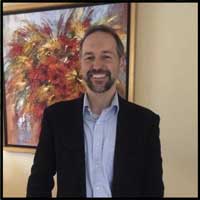
WriterBernd Geels is a Berlin, Germany-based freelance writer and artist. He holds an undergraduate degree in atmospheric science and two graduate degrees. He completed his most recent graduate degree in international environmental studies at the Monterey Institute of International Studies in 2011. He is interested in healthcare, climate change, marine conservation, indigenous science and refugee issues. You can reach him directly at [email protected].
Kimmy Gustafson
WriterAt CounselingSchools.com, Kimmy Gustafson’s expertly crafted articles delve into the world of counseling and mental health, providing valuable insights and guidance to readers since 2020. In addition to feature pieces and interviews, she keeps the state licensing tables current. Kimmy has been a freelance writer for more than a decade, writing hundreds of articles on a wide variety of topics such as startups, nonprofits, healthcare, kiteboarding, the outdoors, and higher education. She is passionate about seeing the world and has traveled to over 27 countries. She holds a bachelor’s degree in journalism from the University of Oregon. When not working, she can be found outdoors, parenting, kiteboarding, or cooking.