
Social Worker
Counseling Schools Search
When you click on a sponsoring school or program advertised on our site, or fill out a form to request information from a sponsoring school, we may earn a commission. View our advertising disclosure for more details.
“What really makes social work unique is that we don’t just work with individuals; we also work with families, communities, and at the policy level. We advocate for change, help shape policies, and address systemic issues.”
Asli Cennet Yalim, PhD, Associate Professor at the University of Central Florida’s School of Social Work
Social work is one of the oldest and most essential professions in the human services field. Social workers help individuals, families, and communities overcome some of life’s most difficult challenges, from poverty and housing instability to mental illness, substance abuse, domestic violence, and child welfare. They serve as advocates, counselors, case managers, and community organizers, often working with people at their most vulnerable.
The profession is remarkably broad. Social workers can be found in hospitals, schools, government agencies, correctional facilities, private practices, and nonprofits. Some provide direct clinical therapy to clients struggling with trauma or mental health disorders, while others focus on connecting people with community resources, navigating the child welfare system, or shaping public policy. This versatility is one of the profession’s defining characteristics and greatest draws.
Social work, as a formal profession, has roots dating back to the late 1800s, when reformers like Jane Addams established settlement houses to address poverty and inequality in American cities. Today, the field is governed by the National Association of Social Workers (NASW) and requires state licensure for clinical practice. Licensing credentials vary by state and level of education, but the two most common are the Licensed Social Worker (LSW) and the Licensed Clinical Social Worker (LCSW).
Demand for social workers continues to grow. The Bureau of Labor Statistics (BLS 2026) projects a 6 percent increase in social work jobs from 2024 to 2034, faster than the average growth rate across all occupations. With more than 810,900 social workers currently employed in the US, the median annual salary for the profession is $61,330, though earnings vary significantly by specialization and setting.
Continue reading to learn what it takes to become a social worker, including the education, licensure, and specializations available in this field.
Meet the Expert: Asli Cennet Yalim, PhD
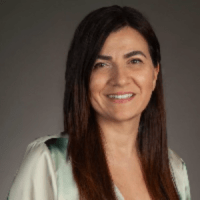
Dr. Asli Cennet Yalim is an associate professor at the University of Central Florida School of Social Work within the College of Health Professions and Sciences. She earned her MSW from Florida State University and her PhD in social welfare from the University at Buffalo.
Before entering academia, Dr. Yalim worked as a child psychologist in health and educational settings in Istanbul, Turkey. Her research focuses on refugee and immigrant mental health, trauma-informed services, culturally responsive interventions, and the well-being of the healthcare workforce. She is also the recipient of the UCF College of Health Professions and Sciences Excellence in Undergraduate Teaching Award.
CounselingSchools.com: What do you wish the public understood about social workers?
Dr. Yalim: I wish more people understood that social work is so much more than child welfare. That’s one important area, but the field is incredibly broad. Social workers are involved in mental health counseling, healthcare, schools, community programs, and more. In fact, social workers are among the largest groups of mental health providers.
What really makes social work unique is that we don’t just work with individuals; we also work with families, communities, and at the policy level. We advocate for change, help shape policies, and address systemic issues. It’s a profession that connects direct support with bigger-picture change, and that’s what makes it so impactful.
CounselingSchools.com: What advice do you have for aspiring social workers?
Dr. Yalim: Choose social work if you genuinely enjoy working with people, communities, and even larger systems like policy and advocacy. This profession requires empathy, compassion, and patience. It’s not the right fit if your main focus is large financial gain, but it is incredibly meaningful work.
Also, don’t feel like you have to decide right away what population or area you want to focus on. It’s very common for students to change their interests as they go through the program. I’ve seen many students shift from clinical work to advocacy, or from child welfare to working with older adults. Stay flexible, keep an open mind, and let your experiences guide you.
CounselingSchools.com: What’s the most rewarding part of social work for you?
Dr. Yalim: One of the most rewarding parts is seeing your clients reach the goals they’ve been working toward. Being part of that process is incredibly meaningful.
As a faculty member, though, my biggest reward is seeing students grow into the future workforce. Knowing that I’ve contributed in some way to their education and that they will go on to shape clinical practice, nonprofit work, and policy is really fulfilling.
What Does a Social Worker Do?
Becoming a social worker requires education, supervised experience, and state licensure. The specific path depends on whether you want to work in a non-clinical role or pursue licensed clinical practice, but both require a strong foundation in social work principles, ethics, and practice. Below are the steps to entering this profession.
Step 1: Graduate from High School or Obtain a GED (Four Years)
The path to becoming a social worker starts with a high school diploma or GED. Students who know they want to pursue this career should take classes in psychology, sociology, English, and human development. Volunteering with community organizations, shelters, or youth programs during high school is also a great way to build early experience and confirm that this is the right field.
Step 2: Earn a Bachelor’s Degree (Four Years)
A bachelor of social work (BSW) is the most direct path into the field and is required for entry-level social work positions in many states. BSW programs are accredited by the Council on Social Work Education (CSWE) and cover topics including human behavior, social welfare policy, diversity and social justice, and field practicum. Students who major in psychology, sociology, or a related field can also pursue social work at the graduate level, though they may need to complete additional prerequisites.
Step 3: Gain Entry-Level Experience
Many social work positions are available to BSW graduates, including roles in child welfare agencies, community organizations, case management, and social services. Working in these roles is valuable whether you plan to stop at the bachelor’s level or continue on to graduate school, as most MSW programs and all licensure requirements include a supervised experience component.
Step 4: Earn a Master’s Degree in Social Work (Two Years)
A master of social work (MSW) is required for clinical licensure and is the standard credential for those who want to provide therapy, work in healthcare settings, or advance into leadership roles. MSW programs are also CSWE-accredited and typically include both coursework and a significant field placement component, often totaling 900 or more hours of supervised practice. Many programs offer specializations in areas such as clinical mental health, healthcare, school social work, children and families, or policy and administration. Advanced standing programs are available for BSW graduates and can be completed in as little as one year.
Step 5: Complete Supervised Clinical Hours and Obtain Licensure
Licensure requirements vary by state, but most require candidates to pass a national exam administered by the Association of Social Work Boards (ASWB) and complete a period of post-degree supervised practice. The two most common clinical credentials are the Licensed Clinical Social Worker (LCSW) and the Licensed Master Social Worker (LMSW), though titles differ across states.
The LCSW typically requires two to three years of post-MSW supervised experience and qualifies social workers to diagnose and treat mental health conditions independently. Continuing education is required to maintain licensure in most states.
Education for Social Workers
A bachelor’s degree is the minimum requirement for entry-level social work positions, while a master’s degree is required for clinical licensure and most advanced roles. All professional social work programs should be accredited by the Council on Social Work Education (CSWE), the national standard-setting body for the field. CSWE accreditation is a requirement for licensure in most states and ensures that programs meet established standards for curriculum, field education, and professional preparation.
University of Central Florida School of Social Work
UCF’s bachelor’s of social work program prepares students for generalist social work practice across a wide range of human service settings. Housed within the College of Health Professions and Sciences, the program covers human behavior and the social environment, social welfare policy and services, research, and social work practice. Elective options allow students to build knowledge in areas such as child welfare, addictions, aging, healthcare, and immigration.
All students complete a supervised internship in a community agency arranged by the school, providing hands-on experience before graduation. The BSW is a limited-access program, and students apply for admission typically after completing their second year of college.
- Location: Orlando, FL
- Accreditation: Council on Social Work Education (CSWE)
- Expected Time to Completion: Four years
Arizona State University School of Social Work
Ranked among the best online bachelor’s programs by US News & World Report, ASU’s bachelor’s of social work is one of the largest and most established social work programs in the country. Students learn social policy, human behavior in the social environment, practice methods, and research, with a strong emphasis on justice, dignity, and competence.
The program is available on campus at multiple Arizona locations and fully online, making it accessible to students across the country. BSW graduates from a CSWE-accredited program with a minimum 3.2 GPA are eligible for ASU’s Advanced Standing MSW program, which can be completed in as little as one year.
- Location: Tempe, AZ (also available online)
- Accreditation: Council on Social Work Education (CSWE)
- Expected Time to Completion: Four years
Columbia University School of Social Work
One of the oldest and most storied social work programs in the country, Columbia’s School of Social Work traces its roots back to 1898 and has long been at the forefront of the profession. The curriculum for the master’s of social work is grounded in the PROP framework, examining the influences of power, race, oppression, and privilege on society and social work practice, and allows students to choose a method specialization and field of practice to personalize their degree.
The program is available both residentially in New York City and fully online, with more than 600 field placement partnerships nationwide for online students. BSW graduates may be eligible for the Advanced Standing track, which requires 33 credits and can be completed in one year.
- Location: New York, NY
- Accreditation: Council on Social Work Education (CSWE)
- Expected Time to Completion: Two years (Advanced standing: one year)
University of Michigan School of Social Work
Consistently ranked among the top social work programs in the nation, the University of Michigan has held one of the top two spots in US News & World Report’s social work school rankings for the past 15 years.
Master’s of social work students choose from eight specialized pathways built on a generalist foundation, covering areas including children, youth, and families; community change; and mental health and substance use recovery. The program is available on campus, online, and in part-time formats, giving working professionals significant flexibility.
- Location: Ann Arbor, MI
- Accreditation: Council on Social Work Education (CSWE)
- Expected Time to Completion: Two years (Advanced standing: approximately 16 months)
University of Southern California Suzanne Dworak-Peck School of Social Work
Founded in 1920, the USC Suzanne Dworak-Peck School of Social Work holds the distinction of offering the oldest master’s of social work and PhD in social work programs in the western United States.
The CSWE-accredited MSW is offered in traditional and advanced standing formats, with five optional practice tracks: adult mental health, children and families, health, military and veterans, and social change and innovation. All are built within the 48-unit curriculum. The program is available on campus in Los Angeles and fully online, with local community-based field placements coordinated by USC’s placement team for distance students.
- Location: Los Angeles, CA (also available online)
- Accreditation: Council on Social Work Education (CSWE)
- Expected Time to Completion: Two years (Advanced Standing: approximately 18 months)
Certification & Licensure for Social Workers
Clinical social work is a licensed profession in all 50 states and the District of Columbia, but the path to licensure looks different depending on where you practice. While the framework is consistent—a degree from a CSWE-accredited program, a passing score on an Association of Social Work Boards (ASWB) exam, and, in most cases, a period of supervised post-degree experience—the specific requirements for each license tier vary considerably from state to state.
License Tiers
Most states offer multiple levels of licensure that correspond to education level and clinical experience. The most common structure includes a bachelor’s-level license, a master’s-level license, and a clinical license. Clinical licensees can practice independently and engage in private practice.
However, states use different titles for these credentials. Massachusetts, Minnesota, Rhode Island, and Washington use the term Licensed Independent Clinical Social Worker (LICSW) instead of LCSW. Whatever the title, the top-tier clinical credential authorizes independent practice, mental health diagnosis, psychotherapy, and direct insurance billing without supervision.
The ASWB Exam
ASWB has five examination categories: associate, bachelor’s, master’s, advanced generalist, and clinical. Which exam you take depends on your degree level and the license you are pursuing. The bachelor’s exam requires a BSW from an accredited institution. The master’s exam requires an MSW. The clinical exam requires an MSW, supervised practice experience post-degree, and results in a license that allows independent and private practice.
Supervised Hours
The most significant variation between states is in the number of post-degree supervised clinical hours required before a social worker can obtain their clinical license and practice independently. Requirements vary widely across the country. In California, candidates must complete 3,000 hours of supervised work experience and must also register as an associate clinical social worker (ASW) with the Board of Behavioral Sciences and pass a separate California Law and Ethics Exam, requirements that go beyond what most other states ask.
In Colorado, LCSW candidates must complete 3,360 hours of supervised work experience over no less than 24 months, with at least 1,680 of those hours in direct clinical work such as testing, assessment, treatment, or counseling. Some states set their bar even higher: in Arkansas, master’s level social workers need to complete 4,000 hours of supervision over two years.
States also differ on how supervision must be structured. Some require a minimum number of face-to-face individual supervision hours in addition to total clinical hours. Others allow a portion of supervision to occur in group settings. California requires both the ASWB Clinical exam and a separate California Law and Ethics exam, making it one of the more complex states for licensure. Texas requires social workers to obtain their licensed master social worker (LMSW) before they can begin accumulating hours toward LCSW licensure, adding a structured intermediate step that not all states require. Wikipedia
Continuing Education
Once licensed, social workers must complete continuing education to renew their credentials, and again the specifics vary considerably. Arkansas requires 30 hours of continuing education during each two-year license period, with at least three of those hours in ethics and no more than 15 hours in independent study.
New York requires both LMSWs and LCSWs to complete 36 hours of approved continuing education for each three-year registration period, with no more than 12 of those hours coming from self-study activities. Many states mandate dedicated hours in specific topics such as cultural competency, suicide prevention, or domestic violence in addition to general CE hours.
The Social Work Licensure Compact
One of the most significant recent developments in social work licensure is the Social Work Licensure Compact, designed to improve portability for licensed social workers practicing across state lines. The compact does not establish a national license. Instead, it creates an optional additional pathway for practitioners to practice in member states without going through each state’s full licensure process, allowing social workers to apply for a single multistate license rather than applying separately to each state.
The Compact reached activation status in April 2024. The Compact Commission convened for the first time in September 2024 and is currently adopting rules and developing a shared data system among member states. This is particularly relevant for social workers providing telehealth services or those living near state borders. Because the compact is still in its implementation phase and multistate licenses are not yet being issued, social workers should verify their state’s current participation status and check directly with their state licensing board for the most current requirements.
Work Settings for Social Workers
One of the most appealing aspects of social work is the many different environments in which practitioners can work. Social workers are employed in a variety of settings, including child welfare and human service agencies, healthcare providers, and schools. Most work full-time, and some work evenings, weekends, and holidays.
The largest employers of social workers include individual and family services organizations, state and local government, ambulatory healthcare services, and hospitals. Within those broad categories, the day-to-day environment can look very different depending on specialization. A child welfare social worker may split time between a government office and home visits to families under supervision. A healthcare social worker in a hospital may spend their day coordinating discharge plans and connecting patients with post-acute care resources. A clinical social worker in private practice may see clients in a small office setting on an appointment-by-appointment basis.
Although most social workers work in an office, they may spend much of their time away from the office visiting clients. School social workers may be assigned to multiple schools and travel around the school district to see students. Understaffing and large caseloads may make the work stressful.
The growth of telehealth has also expanded the settings where social workers can practice. Clinical social workers increasingly serve clients remotely through video platforms, allowing them to reach individuals in rural or underserved areas who might otherwise go without services. This shift has been particularly significant for mental health and substance abuse social workers, and it has opened new possibilities for flexible work arrangements that were not available even a decade ago.
How Much Do Social Workers Make?
Social work is a broad field, and salaries reflect that range. Earnings vary significantly by specialization, setting, education level, licensure, and geography. According to the Bureau of Labor Statistics (BLS May 2025)—the latest data available as of June 2026—social workers earned the following:
Child, Family, and School Social Workers
- Average (mean): $64,000
- 10th percentile: $42,280
- 25th percentile: $48,270
- 50th percentile (median): $59,550
- 75th percentile: $76,070
- 90th percentile: $95,530
Healthcare Social Workers
- Average (mean): $71,790
- 10th percentile: $46,220
- 25th percentile: $56,710
- 50th percentile (median): $67,880
- 75th percentile: $82,240
- 90th percentile: $100,360
Mental Health and Substance Abuse Social Workers
- Average (mean): $68,030
- 10th percentile: $39,740
- 25th percentile: $47,070
- 50th percentile (median): $60,280
- 75th percentile: $79,730
- 90th percentile: $104,170
Earnings vary considerably by employer and setting. Social workers in hospitals and healthcare systems tend to earn more than those in nonprofit or community agency settings. Clinical licensure is one of the most reliable ways to increase earning potential over the course of a career, as LCSWs can practice independently, bill insurance directly, and open private practices.
Professional Associations and Resources for Social Workers
- National Association of Social Workers (NASW)
- Association of Social Work Boards (ASWB)
- Council on Social Work Education (CSWE)
- Clinical Social Work Association (CSWA)
- Society for Social Work and Research (SSWR)
- School Social Work Association of America (SSWAA)
- National Association of Black Social Workers (NABSW)
Kimmy Gustafson
WriterAt CounselingSchools.com, Kimmy Gustafson’s expertly crafted articles delve into the world of counseling and mental health, providing valuable insights and guidance to readers since 2020. In addition to feature pieces and interviews, she keeps the state licensing tables current. Kimmy has been a freelance writer for more than a decade, writing hundreds of articles on a wide variety of topics such as startups, nonprofits, healthcare, kiteboarding, the outdoors, and higher education. She is passionate about seeing the world and has traveled to over 27 countries. She holds a bachelor’s degree in journalism from the University of Oregon. When not working, she can be found outdoors, parenting, kiteboarding, or cooking.