
Guide to Counselor Education Loan Forgiveness Programs (2026)
Counseling Schools Search
When you click on a sponsoring school or program advertised on our site, or fill out a form to request information from a sponsoring school, we may earn a commission. View our advertising disclosure for more details.
“If [counseling students] are currently in school, they should make sure that they have borrowed under one of the existing loan programs before July 1, even if it’s just a token amount, just to preserve their eligibility for the existing loan plans.”
Mark Kantrowitz, Nationally Recognized Expert on Student Financial Aid, Scholarships, and Loans
The student loan landscape for aspiring counselors has changed more dramatically in the past year than in the previous decade. New federal legislation has eliminated the Grad PLUS loan program, capped borrowing for graduate students in ways that directly affect counseling programs, and reshuffled the income-driven repayment options that many counselors have relied on. At the same time, loan-forgiveness programs for public service workers are under political pressure, and the tax status of the forgiveness has shifted.
If you are considering a master’s degree in counseling, mental health, marriage and family therapy, or social work, understanding these changes is no longer optional. The rules you may have read about even a year ago may no longer apply to you.
“Things are going to just get more challenging,” says Mark Kantrowitz, a nationally recognized expert on student financial aid who has testified before Congress on student loan policy and been quoted in more than 20,000 articles. “It’s almost like a war on higher education.”
This guide walks through what has changed, what remains, and what you can do to put yourself in the best possible financial position.
Q&A with Expert: Mark Kantrowitz
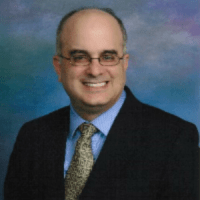
Mark Kantrowitz is a nationally recognized authority on student financial aid, scholarships, student loans, and college planning. He has authored multiple bestselling books on paying for college and has been quoted in thousands of news articles about financial aid policy and planning. His writing has appeared in major publications including The New York Times, The Wall Street Journal, The Washington Post, Forbes, and TIME.
Kantrowitz has served as the publisher and leader of several influential college-planning websites, including FinAid, Fastweb, Edvisors, Cappex, and PrivateStudentLoans.guru, and he helps students and families make informed decisions about the costs of higher education. He also serves on the editorial board of the Journal of Student Financial Aid and is a member of the Center for Excellence in Education’s board of trustees. His academic background includes bachelor’s degrees in mathematics and philosophy from the Massachusetts Institute of Technology and a master’s degree in computer science from Carnegie Mellon University.
The Biggest Change: Counseling Is Now a “Non-Professional” Degree
For decades, graduate students could borrow through the Grad PLUS loan program, which allowed them to cover the full cost of attendance with no aggregate limit. That program no longer exists for new borrowers.
The One Big Beautiful Bill Act, signed into law in 2025, repealed Grad PLUS loans and replaced them with increased limits on Federal Direct Unsubsidized Loans. The catch is that the new higher limits only apply to degrees the federal government has classified as “professional.” That list includes eleven specific degree types: medicine, law, dentistry, pharmacy, veterinary medicine, optometry, osteopathic medicine, podiatry, chiropractic, theology, and clinical psychology.
Counseling degrees, including master’s programs in mental health counseling, marriage and family therapy, school counseling, and social work, are classified as standard graduate programs rather than professional ones. That means counseling students are subject to the lower loan limits: $20,500 per year and $100,000 in aggregate, not counting any undergraduate debt already carried.
Kantrowitz notes that the Department of Education has said this classification carries no negative judgment about the value of these programs: “The Department of Education has made clear that it’s not casting aspersions on the programs that weren’t designated as eligible for the higher professional degree program loan limits,” he says.
But the practical effect is real. Students in counseling programs at more expensive schools may find themselves running up against borrowing limits that did not previously exist.
The good news, according to Kantrowitz, is that for many counseling students the caps may be workable. “My understanding is that an MSW generally has a starting salary of around $70,000 or so a year, and the debt at graduation for most people who have an MSW is less than that,” he says. The aggregate limit of $100,000 is also higher than the average debt at graduation for most counseling-related master’s degree programs, based on the most recent National Postsecondary Student Aid Study data.
That said, students at higher-cost private programs may have a harder time. “Some specific colleges and their programs have average debt above those limits,” Kantrowitz says. “But the average and median overall is less than those limits, which suggests that there are some expensive programs out there that may have some issues with their students’ ability to pay.”
An Urgent Warning for Current Students
Important caveats: the grandfathering requires an actual loan disbursement, not just an application. Students who change programs, take a leave of absence, or transfer to a different school after July 1, 2026, may lose their grandfathered status. If you are uncertain, contact your school’s financial aid office now, before the deadline passes.
If you are currently enrolled in a counseling program, there is a time-sensitive step you may want to take before July 1, 2026.
New borrowers on or after July 1, 2026 will be subject to the new rules. But students who borrowed under the old loan programs before that date are grandfathered in: “If they are currently in school, they should make sure that they have borrowed under one of the existing loan programs before July 1, even if it’s just a token amount, just to preserve their eligibility for the existing loan plans,” Kantrowitz says.
Types of Federal Student Loans (What Still Exists)
Understanding what loan programs are available is the first step in planning your financing. Here is where things stand in 2026.
Direct Unsubsidized Loans
These are now the primary federal loans available to graduate students. For counseling students, the annual limit is $20,500, and the aggregate limit is $100,000 (not including undergraduate debt). You do not need to demonstrate financial need to receive these loans. Interest accrues from the moment funds are disbursed, and you are responsible for that interest at all times, whether you are in school or in repayment.
Direct Subsidized Loans
Subsidized loans are not available for graduate students. They remain available for eligible undergraduate students, meaning if you are completing a bachelor’s degree before entering a counseling program, you may be able to use subsidized loans for that portion of your education.
Grad PLUS Loans
Grad PLUS loans no longer exist for new borrowers as of July 1, 2026. If you borrowed under this program before that date and are grandfathered in, your existing Grad PLUS loans remain valid under their original terms.
Perkins Loans
The Perkins Loan program ended in September 2017. No new Perkins Loans are available. However, if you have existing Perkins Loans, certain forgiveness and cancellation options may still be available to you. See the Perkins Loan Forgiveness section below.
Consolidation Loans
A Direct Consolidation Loan allows you to combine multiple federal loans into one with a single monthly payment. This can simplify repayment and may make previously ineligible loans eligible for certain forgiveness programs. However, consolidating resets any progress you have made toward forgiveness under income-driven repayment or Public Service Loan Forgiveness. Do not consolidate without first understanding the impact on your forgiveness timeline.
Private Loans
If federal loan limits are not sufficient to cover your cost of attendance, private loans from banks, credit unions, or other lenders may fill the gap. These carry their own interest rates and terms set by the lender, and they typically require a credit check.
Kantrowitz notes that many graduate students who hit federal loan limits will find it difficult to qualify for private loans on their own: “Around a quarter or third will have an inability to borrow private student loans, either because they have thin or non-existent credit histories, or maybe they don’t have credit-worthy cosigners,” he says. Roughly two-thirds to three-quarters of graduate students who borrow private loans need a co-signer.
Loan Forgiveness, Cancellation, and Discharge: Key Terms
The terms forgiveness, cancellation, and discharge are related but not identical.
Forgiveness and cancellation both mean you are no longer required to repay any part of your loan. These terms are typically used when your job type or repayment circumstances qualify you for relief.
Discharge refers to being released from repayment due to circumstances unrelated to your job, such as permanent disability, school closure, or the death of the borrower.
A delinquent loan is one where payment has not been made by the due date. After 90 days of non-payment, the loan servicer reports the delinquency to the major credit bureaus. After 270 days without payment, direct loans and FFEL loans are considered in default. Defaulted loans lose eligibility for loan forgiveness, deferment, forbearance, and changes to repayment plans. Getting out of default is possible but complicated, so avoiding it in the first place is strongly advisable.
Loan Forgiveness Programs
Public Service Loan Forgiveness
Public Service Loan Forgiveness (PSLF) remains one of the most valuable programs available to counselors who work in the public or nonprofit sector. If you are employed full-time by a qualifying government agency or nonprofit organization, make 120 qualifying monthly payments over 10 years under an eligible repayment plan, and have Direct Loans, the remaining balance on your loans can be forgiven. Payments do not need to be consecutive.
PSLF is particularly relevant for school counselors, community mental health center counselors, and those working for government agencies or 501(c)(3) nonprofits.
The Trump administration has proposed restricting which employers qualify for PSLF on ideological grounds, potentially excluding some nonprofit organizations from the program. However, Kantrowitz says those restrictions are unlikely to hold up legally. “Those are likely to be challenged in court, and they are unlikely to survive the court challenge because the statutory language doesn’t provide for such a viewpoint discrimination on who is and isn’t eligible,” he says. “If it’s a nonprofit organization or government agency, then working for it counts.” As of early 2026, at least three federal lawsuits have been filed challenging these restrictions, including a 21-state coalition challenge. No employers have been disqualified yet, and courts are expected to weigh in before the proposed July 1, 2026, effective date.
To qualify for PSLF, you must:
- Be employed full-time by a U.S. federal, state, local, or tribal government or a qualifying nonprofit organization
- Hold Direct Loans (or consolidate other federal loans into a Direct Loan)
- Repay under an eligible income-driven repayment plan
- Make 120 qualifying monthly payments
Parent PLUS Loans are not directly eligible for PSLF, but if consolidated into a Direct Consolidation Loan and repaid under the Income-Contingent Repayment Plan, they may qualify.
Teacher Loan Forgiveness
Teachers who work full-time for five consecutive years at a low-income elementary school, secondary school, or educational service agency may qualify for up to $17,500 in loan forgiveness on Direct Loans and FFEL Program loans.
The definition of “teacher” for this program is narrow. Guidance counselors are explicitly excluded. However, school counselors and other public school employees can still pursue PSLF, which ultimately provides greater forgiveness for those who qualify.
You cannot use the same years of service to qualify for both Teacher Loan Forgiveness and PSLF. If you pursue Teacher Loan Forgiveness first and then apply for PSLF, you would need an additional 120 qualifying monthly payments on top of those already made.
Perkins Loan Forgiveness
If you have existing Federal Perkins Loans, you may be eligible for cancellation of up to 100 percent of the balance if you meet certain service requirements. For counselors, qualifying service includes working as a guidance counselor, occupational therapist, recreational therapist, psychologist, or counselor, provided you are licensed, certified, or registered by the appropriate state education agency and are serving in a low-income school or a teacher shortage area.
The Perkins cancellation schedule is 15 percent for the first two years, 20 percent for the next two years, and 30 percent in the fifth year, reaching 100 percent total over five years. If you change employers, the five-year clock resets. Perkins Loans in default are not eligible.
Income-Driven Repayment Plans: A Significant Simplification
The income-driven repayment landscape has been substantially simplified, though the transition has been complicated. Here is what you need to know.
What Has Been Eliminated
The SAVE repayment plan, which Kantrowitz previously described as “a grant after the fact” due to its very low payments, has been eliminated. It was first blocked by the Eighth Circuit Court of Appeals and then formally repealed under the One Big Beautiful Bill Act. A settlement pending court approval will formally end it.
The PAYE (Pay As You Earn) and ICR (Income-Contingent Repayment) plans are no longer eligible for forgiveness upon completion of the repayment period. However, payments made under PAYE, ICR, and SAVE do count toward forgiveness under Income-Based Repayment (IBR). This means a borrower who has been making payments under one of those plans can switch to IBR before reaching the forgiveness threshold and have all those prior payments count.
What Remains: Income-Based Repayment (IBR)
IBR is the surviving income-driven repayment plan that offers forgiveness. Payments are 10 percent of discretionary income for borrowers who took out their first loan after July 1, 2014, or 15 percent for borrowers who took out their first loan before July 1, 2014. Forgiveness comes after 20 years if you had no loans prior to July 1, 2014, or 25 years if you did. IBR payments also count as qualifying payments toward PSLF.
What is New: The Repayment Assistance Plan (RAP)
A new income-driven repayment plan called RAP (Repayment Assistance Plan) launches on July 1, 2026. RAP will be the primary repayment plan for new borrowers. Key features include payments set at 1 to 10 percent of total Adjusted Gross Income (not discretionary income), a minimum payment of $10 per month, and forgiveness after 30 years rather than 20 or 25.
Kantrowitz notes that RAP offers lower payments than IBR for borrowers earning under roughly $75,000, but because the repayment period is 30 years, total payments over the life of the loan are often higher. “The RAP plan has lower payments than IBR if the borrower has lower to moderate income, up to about $75,000,” he says. “But because you’re in repayment for 30 years, the total payments are greater.”
There is a critical warning for current borrowers: if you take out even one new federal loan after July 1, 2026, RAP becomes the only available repayment plan for all of your loans, old and new. This would reset your forgiveness clock to 30 years. Borrowers close to the 20- or 25-year IBR forgiveness threshold should be especially careful.
The New Tax Reality for IDR Forgiveness
Loan forgiveness at the end of an income-driven repayment plan was tax-free through 2025 under the American Rescue Plan Act. As of 2026, that tax exemption has expired, and IDR forgiveness is once again taxable as ordinary income, potentially resulting in a significant tax bill in the year forgiveness occurs.
“Some loan forgiveness that didn’t have independent tax-free status is now taxable,” Kantrowitz says. “Specifically, at the end of 20 or 25 years in an income-driven repayment plan, the forgiveness is taxable.”
One exception: if you qualified for forgiveness in 2025 or earlier but have not yet received it, it remains tax-free under a legal settlement. New qualifiers in 2026 and beyond will owe taxes on the forgiven amount.
PSLF forgiveness retains its tax-free status and is not affected by this change.
Other Circumstances for Loan Discharge
Federal student loans can also be discharged outside of employment-based forgiveness in certain circumstances.
If your school closes while you are enrolled, while you are on an approved leave of absence, or within 120 days after you withdraw, your federal loans may be discharged.
Borrowers who become totally and permanently disabled can have their Direct Loans, FFEL loans, and Perkins Loans forgiven. Thanks to the One Big Beautiful Bill Act, disability discharge has been made permanently tax-free, a provision that had previously been temporary.
If the borrower dies, federal student loans are discharged upon submission of the required proof of death.
If your school engaged in misleading or illegal practices, you may be eligible for borrower defense to repayment discharge.
Bankruptcy does not automatically discharge student loans. A bankruptcy court may grant a full or partial discharge depending on the circumstances, but this requires a separate legal proceeding.
NHSC Loan Repayment Program
The National Health Service Corps Loan Repayment Program (NHSC LRP) is one of the strongest options for counselors willing to work in underserved areas. The program provides loan repayment assistance to behavioral health providers who work in health professional shortage areas (HPSAs).
For 2026, NHSC LRP awards are up to $55,000 for full-time service for behavioral health providers in mental health HPSAs. Unlike many federal programs, NHSC LRP can be used to repay both federal and private student loans, making it particularly useful for counselors who had to borrow privately to cover costs above federal loan limits.
Eligible disciplines include:
- Health Service Psychologists (HSP)
- Licensed Clinical Social Workers (LCSW)
- Psychiatric Nurse Specialists (PNS)
- Marriage and Family Therapists (MFT)
- Licensed Professional Counselors (LPC)
- Substance Use Disorder counselors (through the NHSC SUD Workforce Loan Repayment Program)
To be eligible, you must be fully licensed, working at or in the final stages of employment negotiations with an NHSC-approved facility, and not in default on any federal payment obligations. The program requires a service commitment and is not always funded at the same level each year. The 2026 application cycle closed March 31, 2026; watch for the next cycle to open.
State-Based Loan Repayment Programs: A Growing Bright Spot
As federal programs have become more uncertain and complex, state-level loan repayment assistance has grown significantly. For counselors willing to work in areas with provider shortages, these programs can be substantial.
“The motivation is to recruit and retain employees who have specific skills, so these kinds of things are much more likely in fields for which there are significant current and future shortages, like nursing,” Kantrowitz says. Mental health counselors, social workers, and marriage and family therapists are increasingly included as shortages in behavioral health have become a recognized public health concern.
Some notable examples as of 2026:
- California offers up to $240,000 through its Medi-Cal Behavioral Health Loan Repayment Program for licensed behavioral health providers who commit to working in qualifying underserved sites.
- New York offers up to $120,000 for psychiatrists and up to $30,000 for other mental health professionals through its state loan repayment programs.
- New Jersey offers up to $150,000 over six years for mental health and behavioral health providers.
- Georgia offers up to $150,000 for providers working in underserved areas.
- Oregon has operated a Behavioral Health Loan Repayment Program for licensed mental health and substance use disorder treatment providers. Although it currently has no funds, it may be refunded in future legislative sessions.
Illinois, Texas, Maine, and several other states offer additional programs, some focused on specific shortage areas or tied to state income tax credits based on student loan payments.
Because these programs vary by state and are subject to annual funding decisions, it is worth checking directly with your state’s health workforce agency or department of health for the most current details. Your graduate school’s financial aid office is also a good resource. “The colleges will generally know about the larger programs, as well as anything specific to their locality,” Kantrowitz says.
Employer-Based Loan Repayment Assistance
Beyond government programs, employer-sponsored student loan repayment assistance has expanded and is worth factoring into your job search as a counselor.
Kantrowitz notes that provisions allowing employers to make tax-advantaged student loan payments on employees’ behalf have now been made permanent, which may lead more employers to adopt the benefit. “It’s a great way of retaining employees, because they only receive that benefit while they are working for the employer,” he says.
The two most common forms of employer assistance are monthly contributions toward the employee’s student loan balance, typically around $100 to $200 per month for five to ten years, and 401(k) match contributions tied to student loan payments. Under the second model, even if you are not contributing to a retirement plan, your employer may treat your student loan payments as qualifying you for the employer’s retirement match.
For counselors working in community mental health, hospital systems, or large healthcare organizations, it is worth asking directly about student loan repayment benefits during the hiring process.
Practical Advice for Aspiring Counseling Students
Given everything that has changed, Kantrowitz offers clear, practical guidance for students planning to finance a counseling degree.
“Borrow as little as you need, not as much as you can, and budget before you borrow so you know exactly how much you’re going to need and how you’re going to repay it,” he says. “Live like a student while you’re in school, so you don’t have to live like a student after you graduate.”
He also offers a concrete rule of thumb: “You should aim to have total student loan debt at graduation that is less than your annual starting salary. If total debt is less than annual income, you should be able to afford to repay your student loans in 10 years or less.”
For counseling students, this means the cost of the program matters more than it did when Grad PLUS loans could cover any gap. “You need to consider when you’re choosing a graduate school whether you’re going to be able to get the funding you need in order to enroll. That’s a new challenge,” Kantrowitz says. “Before you had the Grad PLUS loan, so you really didn’t have to worry. Now, how much to borrow and whether it is reasonable to borrow is still an issue.”
In-state public universities often offer counseling programs at a fraction of the cost of private schools, and the quality of training is not necessarily lower. Researching the average debt-to-salary ratios for graduates of specific programs is now an important part of the admissions process.
Finally, take advantage of your institution’s financial aid office and check with your state’s health workforce programs before you borrow. “Make sure to research the websites for state government service corps repayment programs, or StudentAid.gov for federal forgiveness programs,” advises April Sanderson, a financial counselor with LSS Financial Counseling. “If a borrower needs help, seek nonprofit assistance, and never pay for assistance.”
Looking Ahead
Kantrowitz does not expect the environment to improve in the near term. “I think things are going to just get more challenging,” he says, citing cuts to research grants, expanded endowment taxes, and slower hiring at universities. “The funding coming into higher education is much more limited. So the colleges are having to be much more careful in how they fund their graduate programs and how many students they admit.”
For counseling students, the path to financing a graduate education still exists. Public Service Loan Forgiveness remains intact and legally durable. State and employer-based repayment programs are growing. And for students who choose their program carefully and borrow strategically, the debt picture at graduation can still be manageable.
But the margin for error is smaller than it used to be. Going in informed is no longer optional.
All information in this article reflects federal policy as of April 2026. Given the pace of change in student loan policy, readers are encouraged to verify current details at StudentAid.gov, NHSC.hrsa.gov, and their state’s health workforce agency before making borrowing decisions.

Kimmy Gustafson
WriterAt CounselingSchools.com, Kimmy Gustafson’s expertly crafted articles delve into the world of counseling and mental health, providing valuable insights and guidance to readers since 2020. In addition to feature pieces and interviews, she keeps the state licensing tables current. Kimmy has been a freelance writer for more than a decade, writing hundreds of articles on a wide variety of topics such as startups, nonprofits, healthcare, kiteboarding, the outdoors, and higher education. She is passionate about seeing the world and has traveled to over 27 countries. She holds a bachelor’s degree in journalism from the University of Oregon. When not working, she can be found outdoors, parenting, kiteboarding, or cooking.